Can seasonal allergies affect your sense of taste?
Seasonal allergies affect millions of individuals each year, presenting familiar symptoms such as sneezing, nasal congestion, and watery eyes. However, beyond these well-known manifestations, allergies can significantly impact oral health and sensory perception, leading to dry mouth and altered taste; two symptoms that are often overlooked but clinically relevant. Understanding these downstream effects and how lubricity-based interventions can help offer a more complete approach to managing allergy-related discomfort.
The Systemic Impact of Seasonal Allergies
Seasonal allergies, clinically known as Allergic Rhinitis, are triggered when the immune system reacts to airborne allergens such as pollen, mold spores, or grasses. This immune response releases histamine and inflammatory mediators that affect multiple organ systems. While the respiratory tract is the primary target, the oral cavity is secondarily affected, particularly through mechanisms involving airflow, hydration, and mucosal integrity.
Why Allergies Cause Dry Mouth
Dry mouth, or Xerostomia, frequently develops during allergy episodes due to several interconnected mechanisms listed below:
Nasal Congestion and Mouth Breathing: Blocked nasal passages force individuals to breathe through the mouth, increasing airflow across oral tissues and accelerating moisture loss.
Post-Nasal Drip and Mucosal Irritation: Continuous mucus drainage into the throat disrupts normal mucosal hydration and can irritate oral surfaces.
Reduced Salivary Function: Inflammatory signaling and dehydration can impair salivary gland output, decreasing the availability of protective saliva.
As a result of these mechanisms, allergy sufferers can experience:
Increased dryness in the oral cavity
Difficulty speaking and swallowing
Mucosal irritation and micro abrasions
Higher risk of dental caries and halitosis (bad breath)
Altered Taste: A Hidden Consequence
Taste disturbances during allergy season are primarily due to:
Olfactory disruption: Nasal congestion reduces smell, which contributes significantly to flavor perception
Reduced saliva:Saliva transports flavor. When diminished, it’s harder for the flavors to reach your taste buds.
Patients often report diminished taste intensity, blandness, or metallic sensations.
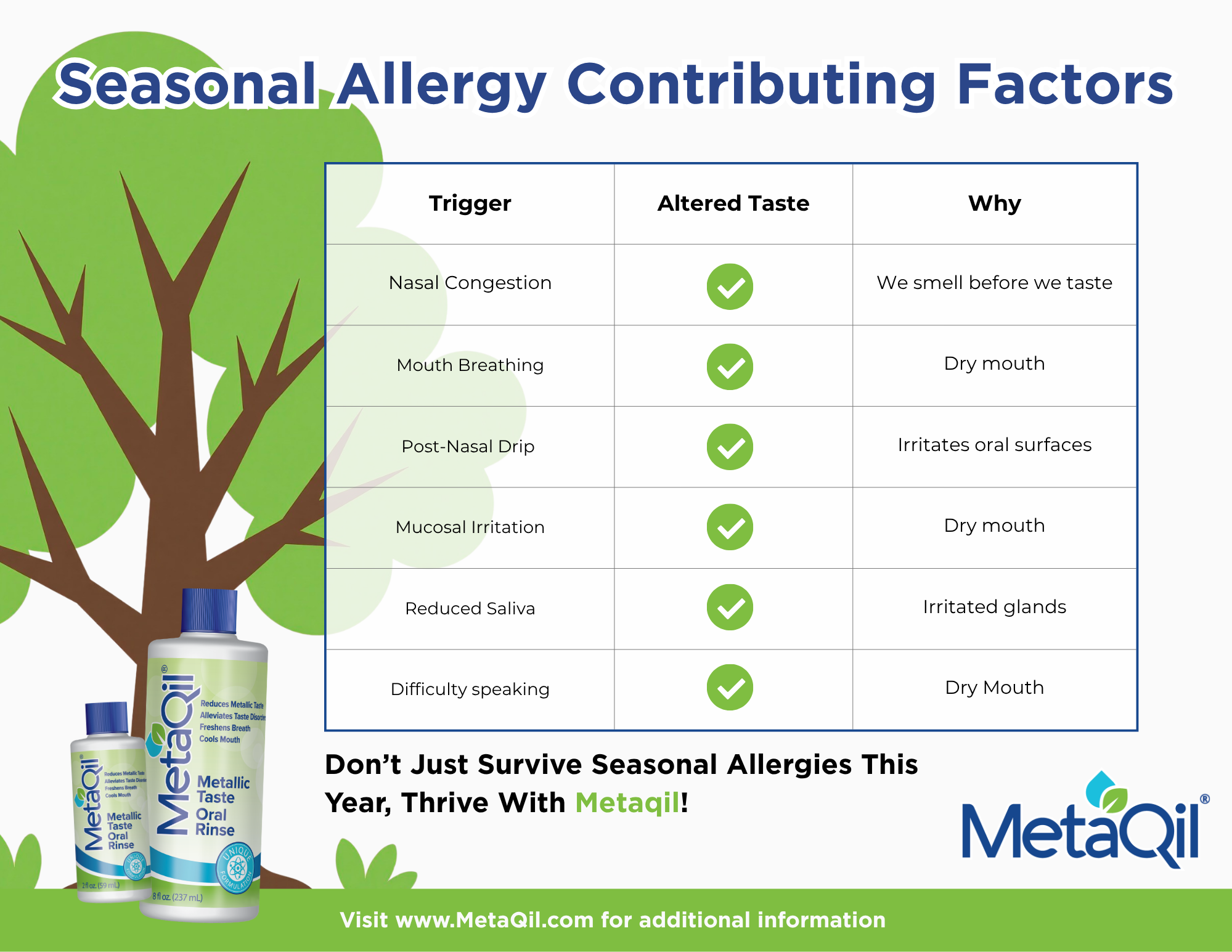
Seasonal Allergy Contributing Factors
Over-the-Counter Support for Dry Mouth & Altered Taste
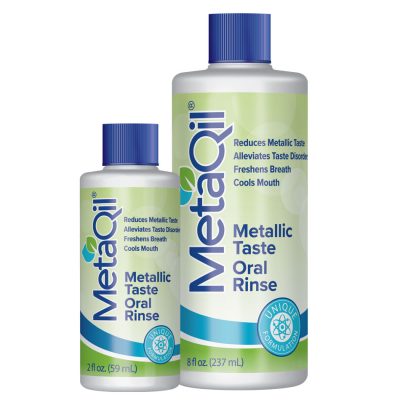
MetaQil is the only oral rinse designed to manage dysgeusia (altered taste), and it can be particularly beneficial in allergy-related taste disturbances. It helps neutralize unpleasant metallic and bitter tastes using essential oils like spearmint and peppermint, while menthone glycerin acetal and vitamin E provide a gentle cooling and soothing effect for immediate, lasting relief.
The formulation is alcohol-free, sugar-free, and gluten-free, incorporating xylitol and monk fruit extract to support a comfortable and well-tolerated oral environment. Importantly, it is designed to be non-stinging and gentle on sensitive oral tissues, making it especially suitable for individuals experiencing irritation and altered taste associated with seasonal allergies.
Additionally, over-the-counter sprays such as Lubricity are designed to provide immediate and long-lasting relief from symptoms associated with dry mouth (xerostomia). It functions as a saliva substitute by coating the oral cavity with a moisturizing film, lasting up to 4 hours per use.
When saliva is reduced, friction increases, leading to discomfort, irritation, and impaired function.
Supporting the Mouth Biome vs. Simple Hydration
It’s important to distinguish between:
Hydration alone: Temporary moisture that fades quickly
Metallic Taste Rinse (MetaQil): Helps neutralize the bitter or unpleasant taste
Lubricity-based systems: Structured moisture retention with sustained surface protection
This matters for allergy-related dry mouth, where ongoing issues like mouth breathing continue to disrupt moisture balance.
Without adequate saliva, bacteria may accumulate more easily, and the oral environment can become less stable. This is why restoring moisture is increasingly recognized as an important step in supporting a healthy oral environment.
Integrating Oral Support into Allergy Care
Managing seasonal allergies should extend beyond antihistamines and decongestants to include support for oral health.
A comprehensive approach includes:
Addressing nasal congestion
Maintaining hydration
Encouraging intake by minimizing off-putting flavors
Supporting salivary function
Using lubricity-enhancing oral formulations
Seasonal allergies are a multi-system condition with significant, often underrecognized effects on the oral cavity. Dry mouth and altered taste arise from a combination of mechanical, inflammatory, and sensory disruptions.
Lubricity-based interventions offer a scientifically grounded solution by restoring moisture, reducing friction, and protecting mucosal surfaces, ultimately improving both comfort and quality of life during allergy season.
Passionate about creating thoughtful, user-friendly marketing that helps people discover and connect with Lubricity. Focused on leveraging data, smart technology, and streamlined strategies to deliver meaningful customer experiences.
When Quitting Smoking Changes Your Taste: Understanding Varenicline (Chantix) and What Can Help Quitting smoking is one of the most important steps someone can take for their long-term health. For many people, medications like varenicline (commonly known by the brand name Chantix) can significantly improve the chances of successfully quitting. But