
Dry Mouth Causing a Metallic Taste
Uncover why dry mouth is causing a metallic taste and explore practical solutions to manage these symptoms for optimal oral health.



After surgery, your body begins the long and often exhausting process of recovery. Pain, fatigue, and restricted movement are expected — but what catches many people off guard is something they can’t quite explain at first: food suddenly tastes strange, in other words altered taste after surgery.
An altered taste after surgery might cause you to find your favorite dish bland, bitter, or downright metallic. For some, it’s like chewing on coins. Nothing tastes right. The joy of eating disappears, and over time, so can your appetite.
While medications and nerve changes are often blamed, one overlooked cause is your nutrition — specifically, the way it shifts after surgery. Thankfully, there are ways to manage it, including with one quick rinse of MetaQil, which is specifically designed to help combat that altered taste and bring food back to life again.

Several factors can affect your sense of taste post-surgery:
After surgery, your body enters a high-demand state. You may,
As a result, key nutrients that support taste and smell may be excluded, including:
Even a small deficiency can affect your ability to enjoy food — and worsen the cycle of low appetite and poor intake.
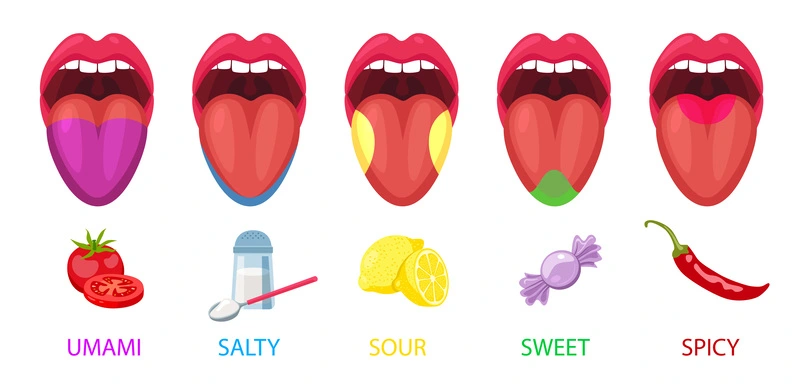
People experience it differently, but common complaints include:
In some cases, it becomes so unpleasant that patients say food is just “not worth eating”.
For many, this isn’t just annoying — it’s discouraging. Imagine being hungry, sitting down to eat, and realizing every bite tastes like you’re licking a handful of pocket change. That metallic, lingering taste can last for days or even weeks. You start to lose interest in meals. You skip them. You may even start to lose weight unintentionally.
This is where MetaQil comes in.
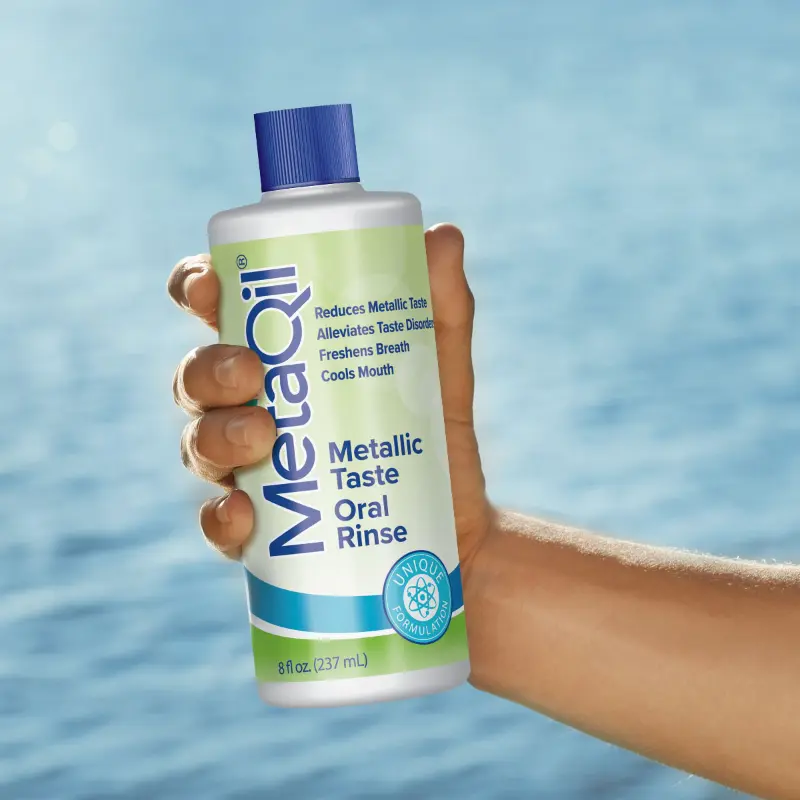
MetaQil is a first-of-its-kind oral rinse specifically designed for people dealing with metallic or altered taste sensations, medically known as dysgeusia. It’s alcohol-free, gentle, and safe to use multiple times per day.
MetaQil works by:
Many people find that using MetaQil before meals makes food tolerable again — even enjoyable.
If your food has tasted like metal for days or weeks, this small step can make a huge difference.
In addition to using MetaQil, you could try these supportive strategies:
Include foods rich in zinc, B12, iron, and protein. If you can’t tolerate solids, ask your healthcare provider about nutritional shakes or supplements.
A dry mouth can worsen altered taste after surgery. Sip water throughout the day and try mild rinses. Using a mouth moisturizer like Lubricity or Lubricity Xtra to moisten the tongue which lasts up to 4 hours can help, especially if a High-Flow Nasal Cannula (HFNC) is in use.
Some people tolerate cold or room-temperature foods better than hot. Crunchy textures may also be more satisfying.
Flavor enhancers like lemon juice or other citrus juices, vinegar, basil, or garlic can help “cut through” taste disturbances.
Even if meals aren’t enjoyable, small bites can help you meet your nutritional needs to avoid worsening deficiencies.

If your altered taste lasts longer than 3–4 weeks, or if you’re experiencing:
Any of the above should signal that it’s time to check in with your provider. You may need lab tests to check for nutritional deficiencies or other possible underlying issues.
Altered taste after surgery is more common than most people realize, and these taste changes can take a toll both physically and emotionally. Luckily, they are usually temporary, and more importantly, they are manageable.
By supporting your nutritional needs and trying targeted solutions like MetaQil Metallic Taste Oral Rinse, you can ease the discomfort, regain your appetite, and get back to enjoying meals again — one bite at a time.