ACDF Surgery Recovery: Why You Notice a Metallic Taste
Dealing with mucus in throat after ACDF surgery? Find tips and remedies on our blog to help cope with this common post-surgery issue.



Have you ever taken a bite of your favorite meal only to be met with an unexpected metallic, bitter, or otherwise strange taste? If so, you may have experienced dysgeusia — a taste disorder that can make foods and beverages taste different than they should, and as a result are probably wondering, “why does dysgeusia happen?”. For some people, this metallic taste is constant; for others, it comes and goes.
While dysgeusia may seem like a minor annoyance at first, it can quickly affect your appetite, your enjoyment of food, and even your quality of life. Understanding why dysgeusia happens is the first step toward finding effective relief.
In this guide, we’ll cover what dysgeusia is, the common causes of metallic taste, how it can affect daily life, home remedies that may help, and how many people find fast relief with MetaQil® Metallic Taste Oral Rinse.
If you’ve ever asked yourself, “Why does dysgeusia happen?”, or “what is dysgeusia?” you’re not alone. Dysgeusia is a medical term for a distortion in the sense of taste, often leaving you with a metallic taste or bitter, unpleasant flavors in your mouth.
People with dysgeusia often describe flavors as:
Dysgeusia is different from ageusia (complete loss of taste) and hypogeusia (reduced taste sensitivity). With dysgeusia, you can still taste — but the tastes are altered typically in an unpleasant way.

Taste perception is a complex process that involves your tongue, taste buds, nerves, and brain working together. Anything that disrupts this system can cause distorted or metallic taste sensations. Here are some of the most common causes:
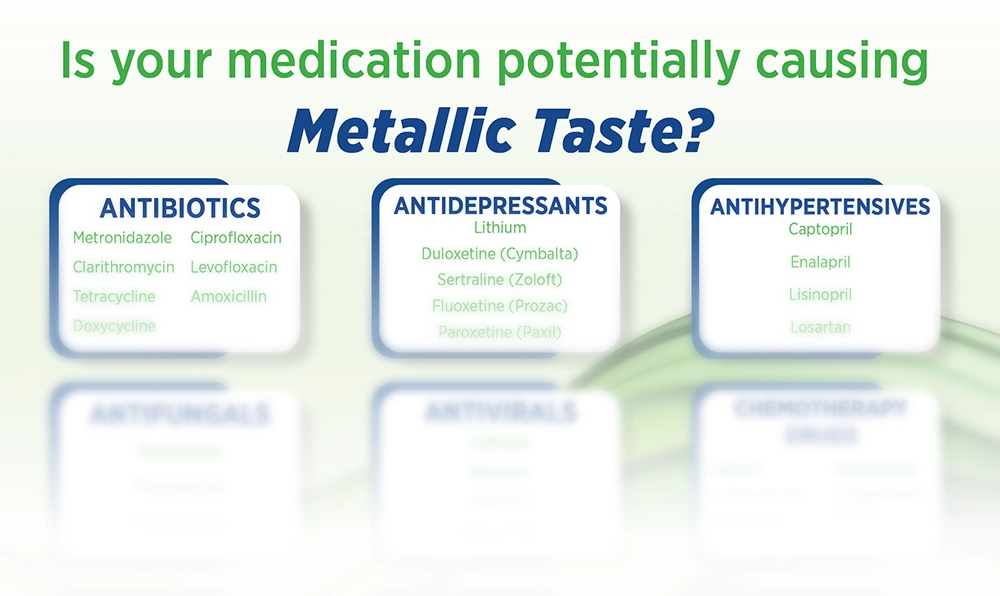
Certain drugs can directly alter taste perception or reduce saliva flow, which impacts taste. Medications known to cause metallic taste include:
Radiation and chemotherapy can damage taste buds or affect the nerves involved in taste perception. Many cancer patients report experiencing a metallic taste shortly after treatment begins.
Gum disease, tooth infections, and poor oral hygiene can lead to bacterial buildup that produces unpleasant tastes. Inflammation in the mouth may also alter nerve signaling related to taste.
Low levels of zinc, vitamin B12, or other nutrients essential for nerve health and taste bud function can cause dysgeusia.

Some surgeries — especially those involving the mouth, nose, sinuses, or head — can temporarily disturb taste perception. Dysgeusia is also a possible side effect of intubation during surgery.
Colds, flu, sinus infections, and COVID-19 can all temporarily alter your sense of taste by inflaming nasal passages or affecting taste-related nerves.
Diseases like Parkinson’s, Alzheimer’s, and multiple sclerosis can disrupt the brain’s ability to interpret taste signals correctly.
Hormonal changes can trigger metallic taste in the first trimester — often described as a persistent “metal mouth” sensation.
Inhaling certain chemicals or metals (such as mercury or lead) can leave a metallic taste in the mouth.
Saliva plays an important role in carrying flavors to your taste buds. Reduced saliva flow — from dehydration, medications, or medical conditions — can make flavors seem off or metallic.

For some, the desire to understand why does dysgeusia happen is related to a temporary inconvenience they’re experiencing. For others, it’s related to a persistent issue that can seriously impact well-being. Common challenges include:
The answer depends on the cause. If dysgeusia is related to a short-term illness or medication, it may resolve once the underlying issue is addressed. However, for many — especially those undergoing ongoing medical treatment — symptoms can linger for weeks, months, or possibly even longer without intervention.

While not all cases of dysgeusia can be cured at home, some strategies may help reduce symptoms:
Drink plenty of water to keep your mouth moist and help wash away lingering tastes. Sucking on ice chips can also help.
Brush your teeth, gums, and tongue at least twice a day. Floss daily and use an alcohol-free mouth rinse to avoid irritation.
Some people find relief by adding tangy, tart, or citrus flavors to meals — like lemon, vinegar, or pickled vegetables — to try overriding the metallic taste.
Metal silverware can sometimes worsen the sensation. Try using plastic, ceramic, or wooden utensils instead.
Foods high in sugar, salt, or fat may intensify dysgeusia symptoms. Pay attention to what worsens your metallic taste and avoid those triggers.
Minty or fruity sugar-free gum can help mask unpleasant tastes and stimulate saliva production.
Hot foods tend to release more aromas, which can intensify metallic taste. Cooler foods may be easier to enjoy.

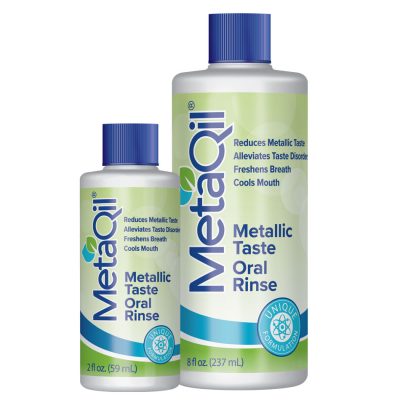
While home remedies can provide occasional relief, they often offer only fleeting results — and may not work consistently. MetaQil® Metallic Taste Oral Rinse is specifically formulated to address the unique challenges of dysgeusia.
MetaQil works in three key ways:
How to Use MetaQil:
Simply swish about a teaspoon (5 mL) of MetaQil around your mouth for 30 seconds and do not swallow. Relief is often immediate and can last for hours.
If you’ve been wondering “why does dysgeusia happen?”, the answer is that there’s no single cause — but rather a wide range of possible triggers, from medications and medical treatments to oral health issues and nutritional deficiencies.
While some cases resolve on their own, many people need help finding relief from the symptoms of persistent metallic taste. Home remedies like hydration, good oral hygiene, and flavor adjustments can help, but for fast, targeted relief, MetaQil Metallic Taste Oral Rinse is the trusted choice.
With MetaQil, you don’t have to let dysgeusia interfere with your meals, your health, or your enjoyment of life!